Tuesday, February 06, 2007

Photos are up!

February 5, 2007 - Rarotonga

Tonight a lizard ran across my knee and down my other leg.


Apparently there are a few people out there who actually read my blog, because I've had a few e-mails wondering where I've been and how I am. The answers are simple, fairly short and very gentle.
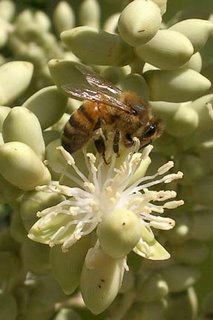
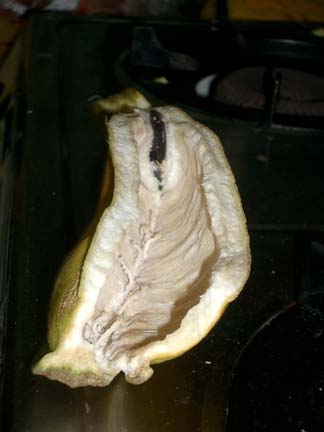
The exciting part of the trip is over. Now all that remains are a few days of complete relaxation. What have I been up to? On Saturday I went into town and went grocery shopping. Saturday night when Mike came home he introduced me to ice cream fruit. I'll have to upload a photo of it and explain it then because it would never make sense in a million years otherwise. It is a bean that works like a banana with the consistency of marshmallow and the inside is the same size as lotus seeds...

On Sunday I watched my last remaining housemate move to the other side of the island. Then I picked up munchies at the Seventh Day Adventist store down the road. Today I rented a bike that is a bit big for me. Getting on is a challenge. It involves tilting it to the side a bit and pretty much launching onto the far pedal with a forward motion while resting most of my weight on the handle bars. Once on the bike it rides very nicely, and for the benefit of everyone who is concerned for my safety, I brought my own bike helmet and lights.

My first stop on the ride was the cafe at the botanical gardens. I enjoyed a lovely lunch - the food here has been fantastic. I don't eat out much to begin with, but when I have it has exceeded my expectations - even Raro Fried Chicken and FBI (that's Fish Bites Inc.) fish and chips. I also asked my barista today what the difference is between a flat white and a latte. Anyone from Australia or New Zealand might already know this; I am guessing that most folks from North America will never have heard of a flat white. I was excited when I found out the Cooks were in friendly association with New Zealand because I could have more flat whites, and hopefully figure out what one is. The way my barista explained it made it sound simple. A 12 oz. latte in Starbucksland gets one shot of espresso. But a flat white gets two shots. Flat whites come in one size, and that is small. Lattes come in all sizes and do not taste as strongly of coffee. The espresso in question was from Juergen's farm on Atiu - it makes a lovely espresso.

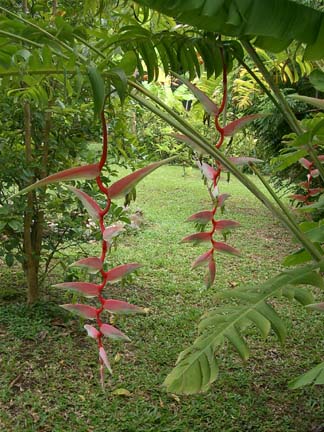
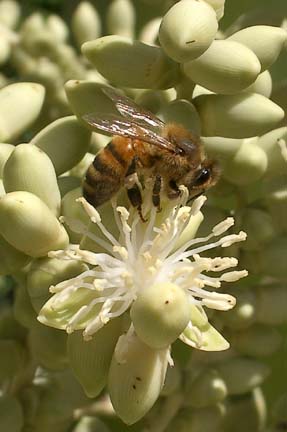
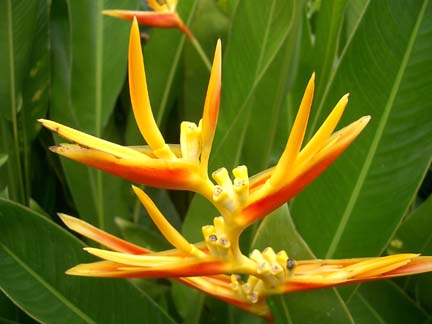
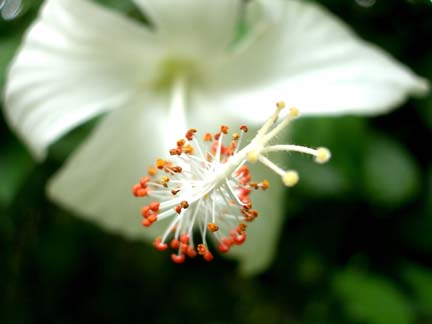
After lunch I took a walk through the garden. It was beautiful. I filled the memory card on my camera with photographs of flowers and plants and growing things. The majority of them turned out very well.

Back on the bike, I made it as far as the next beach. I parked the bike and waded into the ocean where I noticed a large school of tropical fish - iridescent white ones - and one larger fish that would zoom through now and then to terrorize them. The island is surrounded by a coral reef, meaning it is not great for swimming and great for snorkeling and very much fun for wading.

I swung round to the beach at Blackrock where I stopped for a breather again, enjoying the ocean. It is amazing to be able to stop and watch the ocean.

I called through a store just behind the airport to see if they had any of Mata's coffee left - she's the one who roasts in coconut cream. I think I managed to scoop the last two bags on the island. (For anyone interested in what CIDA is doing over here, apparently we gave Marshall a ladder to make his Kopeka cave tour easier, and according to the back of the coffee bag we're doing something to help Mata produce coffee as well.)

Tonight I have killed time in the common room at the guesthouse while the Irish ones watched an incredibly bad movie. My photos are edited and ready to have prints made when I get home, and I have accomplished some writing as well. All was going well and truly slowly and was relaxed... until the lizard ran down my leg.

I think the little gecko fell from the ceiling? I have no idea where it came from. It was maybe the length of one of my fingers. I felt something warm land on my knee and large enough that I went to swat it but then it moved to my other leg and ran down my leg onto the floor. It was then that I was able to discover what it was. It didn't scratch, it almost tickled. It was light, warm, fast, and gone before I could exclaim to anyone what had happened.

And that, Ladies and Gentlemen, is all the excitement.

Jen out.

Paul's last night


Monday, January 29, 2007

Raro Culture Shock


Everywhere I look something or someone is in action, the noise from the traffic is constant, there is music, electricity, pavement and even air conditioning. I cannot believe the number of people or the cheapness of fresh groceries. There were two cafes, open and with people inside. There are shops selling non-essential items. There is wireless internet.

Atiu is so silent in comparison it is unbelievable. It was hot and dry and magical and now that we are back to civilization (aka a place with some semblance of a cafe culture and a nightlife and a local newspaper and fresh veggies) I understand the slogan used to advertise the island: Atiu - Get Away From It All. Before we left I wondered get away from what? Now I know. Get away from everything.

My farewell 'ei is hanging in my room making it smell of beautiful gardenias.

Jen out.

Sunday, January 28, 2007

Jen's Top 10 Items for Survival on a Deserted Tropical Island

January 28, 2007 - Atiu

1. Mosquito repellant - tonight I tease them by sitting by a screened window and they are almost deafening.
2. Reliable can opener - because we assume your island has one store that gets canned cargo on average once every two or three months.
3. Something to trade for cheese - grow local fruit and ship it to someone in the next biggest country in exchange for quality/any cheese.
4. Stationery - meaning nice paper, sturdy envelopes, sharpie markers and very nice pens.
5. Sturdy hiking boots - for navigating makatea forests, caves, sandy beaches and roads.
6. Sunscreen/big hats - It's darn hot. Really darn hot.
7. Veggie seeds - grow your own or you won't ever see them fresh.
8. Shipping contract with Silk Soy beverages - not only is there no soy drink on the island, the next nearest one tastes rather bad and curdles in tea and coffee. The alternative is UHT longlife milk, a well preserved dairy that seems to be able to withstand extreme outside heat without refrigeration. This should not be possible.
9. Egg laying chickens - will save you a small fortune in eggs and can be amusing when it is so hot there is nothing to do but watch the chickens.
10. Breadmaker - this applies only if you do not live on Atiu. If you live on Atiu, there is an excellent bakery that creates amazing bread. If you live on Atiu, the number ten item is a French Press. The island's amazing coffee is homegrown but there is no other way to have it other than at home.

Rare Birds, Bush Beer and Fresh Bread

January 27, 2007 - Atiu

Gear safely stowed in the back of the truck, we headed off down the road. We parked the truck where the road almost ended, and hiked further into the bush. Bush slowly gave way to makatea, or coral forest (yes, that does mean coral growing a decent distance from the ocean with forest around and on top of it) and as the path became more treacherous, we came across walking sticks. We met birds, hermit crabs, lizards.
A short descent down a ladder and we lit our headlamps at the mouth of the cave.
Inside we heard legends and saw a naked beehive. We saw evidence of coconut crabs and when we went further into the cave, we were shown a very tiny nest. Then we heard it - a series of clicks and in flew a Kopeka, a rare bird native only to Atiu.
Outside the cave, the bird relies on sight for navigation. It has a beautiful song. Inside the cave it uses clicks to navigate in total darkness to its nest. When it alights on the nest, it returns to its beautiful birdsong.
We spent a fair bit of time in the cave with the bird, then retreated to more middle ground where we left most of our gear. Marshall went on ahead of us, lighting candles and leaving them in strategic places in the cave. Slight change of clothes later and we were having a very brisk swim in a mineral pool in a candle lit cave.
Post-cave we were left to fend for ourselves at the tumunu. This is a bush beer drinking gathering unique to Atiu. Its history is steeped in hiding from the missionaries, but today it is a much more open gathering. The bush beer is a local homebrew. I am a bit lost trying to describe it. The first sip tasted of sake, then it was malty, then it had a sweet, almost orange finish. It had a fairly light body, was quite sweet, tasted nothing like beer as we know it and is very powerful. The man pouring the drink had a small coconut shell that he would dip into the bucket of tumunu and pass to each person in the circle in turn. The men discussed things mostly in Maori, occasionally breaking into English to explain things to us. I was the only woman in the circle, and apparently it is only in recent time that women have even been allowed to join in.
After the tumunu was time for a nap. This was important because it was not to be an early night. The island's bakery is run by Seventh Day Adventists. Their sabbath is from sundown Friday to sundown Saturday. Every Saturday night about 11 p.m. they re-open the bakery and bake fresh bread. The event has become a bit of a gathering for the island's young people who show up at the bakery and sit on the lawn, talking.
The owner's son and one of the bakery workers approached us in the dark and introduced themselves, inviting us to watch from the back of the large mudbrick oven. Soon we could smell bread baking.
We left with four long and skinny loaves - a gift from the baker's son. We tried to tear into them as we were leaving but they were simply too hot. When we finally could get a piece off, we were pleased to discover it is perhaps the best bread we'd ever had. Two loaves disappeared on the way home.

Friday, January 26, 2007

Cherries and Peaberries

January 26, 2007 - Atiu

Today was coffee tour day. Jurgen picked us up after breakfast and took us out to one of the places on the island where the coffee trees grow. His trees come from Kenya, the Antigua region of Guatemala, and somehow he managed to get a handful of Jamaica Blue Mountain seeds. His coffee is a blend of Arabica beans from all three trees. I'm not going to spend a lot of time here going into the history of coffee - I will assume you know it and if you're one of the rare few I haven't sat down with to share the location of the Great Rift Valley, well, I guess we'll have to have coffee one day and discuss it.
From the plantation we went to the processing facility. Coffee cherries are picked ripe and de-pulped with the help of something looking like a rotary cheese grater. It takes away the fruit, leaving you with a slimy coffee bean. The coffee is then fermented in water overnight. This serves two purposes - firstly it gets the cherry slime off the coffee bean, but perhaps more importantly, it allows the bad beans to float to the surface where they are picked off and chucked.
The fermented beans are left in drying trays out in the sun for at least 150 hours. When the coffee is sufficiently dry, it is taken to the machine that takes off the parchment - the thin papery covering left on the beans. Once that is done, they are roasted and packed either ground or whole bean.
At the end of the tour we stuck it out for a coffee tasting in town. It was fantastic. The coffee has floral notes characteristic of Kenya, coco texture characteristic of Guatemala Antigua, and the earthy green body of Jamaica Blue Mountain, as well as the very unique flavour of having been grown on Atiu. Kudos to Jurgen - what I promised when I said I'd bring back coffee for everyone at home was that I'd only bring back the good stuff. Jurgen grows good coffee.

Thursday, January 25, 2007

Welcome to Paradise

January 25, 2007 - Atiu - 11:45 am

Atiu is visible out the side windows of the cockpit and they are removing the sun shield and beginning preparations for landing. The airstrip was on the opposite side of the island from our approach, necessitating a U turn over the ocean before we could land. As we approached the airstrip I was thankful for the small size of the aircraft, especially when I realized it was unpaved.
The airport at Atiu isn't more than a small shed with a roof and two walls. There is a notice on the inside about a voluntary security check. Everyone was milling around with flower 'eis, greeting and sending off. Marshall found us, handing off two gardenia 'eis which smelled phenomenal. Properly greeted we obtained our luggage such as it was. Marshall kept looking, saying he was expecting a package. He was surprised when I told him I had it in my bag already. His daughter spotted us at the airport and asked us if we would take a package of cheese to her father.
Before being given a brief tour of the island, we were shown the harbour. The harbour is where all the excitement happens. The day before, the cargo ship had finally arrived. This was cause for great excitement because sometimes there is no cargo for a few months. Food here is expensive and unless you grow your own vegetables or raise your own meat, your diet won't be greatly varied and will consist mostly of canned goods. Even then you are limited to peas, creamed corn, tomatoes, spaghetti, beans, kidney beans, tuna, pink salmon, mackerel and the local "corned beef" which is really spam in a can. You also have noodles, rice and if you get lucky like we did yesterday, fresh potatoes. I also made the discovery of fabulous plain donuts, which I assume come from the bakery.
In the meantime, we were shown to the cafe where we were given grilled tomato and onion and cheese sandwiches - the only thing on the menu as it was the only thing in stock. The lady who runs the cafe sat out and talked with us, giving us all kinds of information on the island. The conversation was fabulous and I wouldn't hesitate in recommending the cafe to anyone who is here.
Marshall Humphreys is our host - Atiu homestays is where we currently call home. He and his wife raised their kids here and now that they've all moved to either Rarotonga or Australia or New Zealand, the house is vacant. Marshall is the ex-hotelier who introduced fine dining to New Zealand way back in the day. His wife is an artist from Atiu. The house is huge and beautiful and tied down. It is cyclone season. The lady who runs the cafe tells us that because of cyclone season, there won't be any dances. Apparently Friday night is dance night down at the local community hall - except during cyclone season.

Atiu - Get Away From It All

Morning. A new day, a new way, a new place. Soon to be a new place. Between now and then only time to kill. The papers say we only have to check in half an hour before the flight. This seems a bit unusual to me - won't it take almost that long to go through security and board the aircraft? To my surprise, no. We fight with returning wheels to the rental place, then head across the road to the airport in search of the very closed cafe.
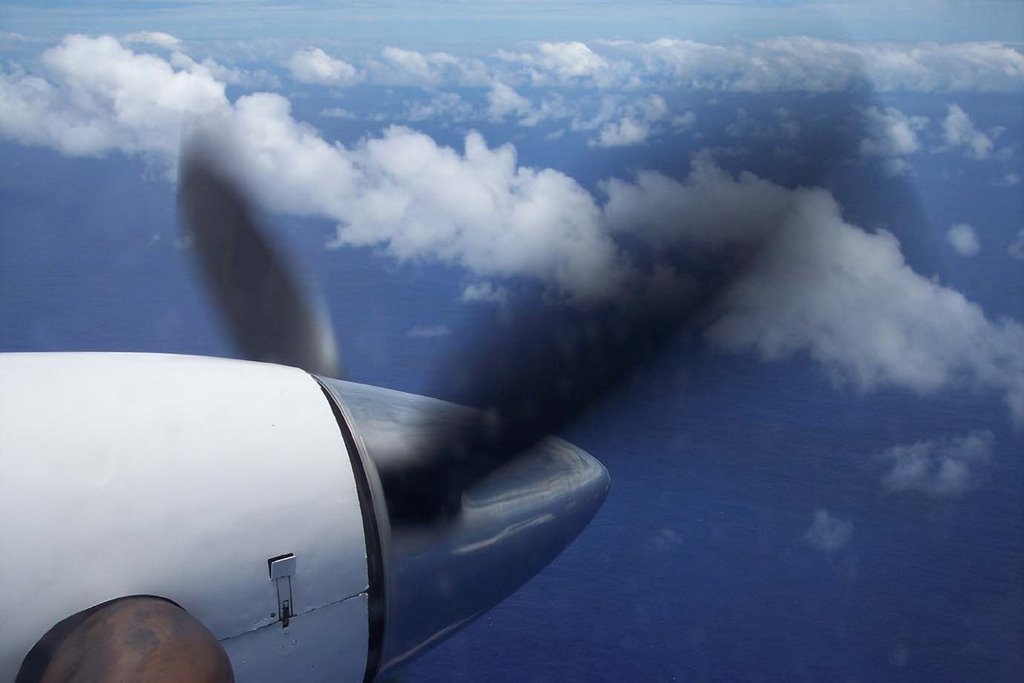
The airport is relatively bustling and the crew are efficient. Security does not exist for domestic flights here. In fact, they didn't even check our ID. We were welcomed onto the aircraft and given the fabulous front row seats. The pilot was on when we got there. The first officer closed the doors, told us to keep our seatbelts on, that the weather was fine, and to enjoy the flight. Apparently with Air Rarotonga we had two choices for aircraft - a small Saab, or the Bandit made by Embraer out of Brazil. We flew in the Bandit.
As soon as we were in the clear above the clouds, the pilots put a sun shield across the windscreen. The first officer proceeded to open and shut the window several times throughout the flight, which was as smooth as could be.

Wednesday, January 24, 2007

Airplanes and cyclones and scootcars, oh my!

A sigh of relief comes from me - Zita passed without incident nowhere near here yesterday and it looks like Arthur is going to follow a path so far from here that our flight to Atiu shouldn't be affected. This is a good thing. The Cooks are still forecasted to have another two or three cyclones hit this year, and for all of you who don't know, yes, yes, it is Cyclone Season!
In other news, we rented a scootcar today.... imagine a tuk tuk without the rear seat attachment and you have the modern scootcar. Slow, noisy and a very fun fun fun way to see the sites - including an ancient Marae where they blessed the Maori explorers with celebration and human sacrifice before they set out for New Zealand - coincidentally very nearby the beach from where they actually set out in the mid 1300s. A marae is a Maori meeting place, usually fairly sacred ground.
Tomorrow morning we shove off at a leisurly pace for the island of Atiu via Air Rarotonga, where Mr. Humphreys will meet us at the airport. From there we will drive almost entirely across the island to his house where we have arranged to stay with his family for four days. The purpose of the visit is to tour/taste at the Islands' two coffee farms... as well as observe the sabbath the local way. The Seventh Day Adventists run the local bakery. The Adventists have their sabbath on Saturday. In between their sabbath and the Sunday sabbath, they re-open the bakery to make bread. According to the book, the thing to do on Saturday at about midnight is go to the bakery for fresh bread.... and then catch church in the morning!
There is no internet on Atiu so the rest of the stories will have to wait until next Monday. If you are wondering where Atiu is, go to my first post and look up the linked map.... zoom in until Rarotonga is quite big. Atiu is northeast of here a tiny bit, just south and a bit east of the larger Aitutaki.
Jen out.

Wednesday, January 17, 2007

The Anti Clockwise Bus

January 17, 2007 - Avarua, Rarotonga

Motor scooters and vehicles pass by the window. Somewhere Over the Rainbow is being swung to a polynesian rhythm. The sun shines on the building across the road, its side the same green as moss. Jungle and hills are visible beyond.

Nothing seems to rush or be in a hurry - it would be impossible to be in a hurry in this heat.

There are two ways to get into Avarua from home. The first is the back road, the second is the main road via the airport. I live close to the airport. It is about a three minute walk if I am particularly slow. The large jets rattle my windows. By the time I leave I will know the schedule of who flies when like the back of my hand. I still have not seen United fly in - I heard they do - just Air New Zealand and Air France.

The back road is primarily residential. It is at the foot of the mountains and runs in some form or another around the whole island. Places are given as being on the back road or the main road. The walk into town is not long - surprisingly it feels shorter to walk by the airport than along the back road, although the back road is much better lit at night.

The jungle is amazing. I cannot think of how to describe the flora other than to use other places - it reminds me of the Caymans and Hawai'i with a handful of bushes and trees I've seen on the north island of New Zealand.

The people are friendly, quiet, polite. Welcoming. Folks say hello on the street and in the shops. They know where I am from, slowly. They cannot imagine what -20 with a foot or two of snow would be like.

The island holds two buses - the Clockwise Bus and the Anti Clockwise Bus. Both stop at the bus stop in Avarua and a round trip around the island is about a half hour in duration. Avarua is clearly the only town of any size on the island. Muri beach is noticeable, as is Black Rock, but neither seem to have the structure of Avarua. The rest of the island is a loose collection of homes and businesses strung along the main road - much as settlements seem to be on all the small islands I have ever visited.

The beach is a bit of an enigma. It exists. But it is not particularly good for swimming due to the large numbers of sharp rock and coral in the water. The current is quite strong. It appears to be relatively consistent around the island - rocky lagoon areas, broken up by areas inaccessible due to rather large black rocks along the shore. I get the feeling this will not be a swimming trip per se - although I am reserving judgement until I have seen what 'Atiu has to offer.

There are several pubs/nightclubs in Avarua - and by several I mean there's TJ's, Banana Court and the RSA, as well as Nu Bar down by the airport. Throughout the week they rotate and each pub has a night where it is the feature pub - and it appears most of the island turns out for the fun. I have not been to TJ's - the night I arrived it was Banana Court where they held the dance competition, and last night was Banana Court again. Banana Court is frightening. They have a dance floor and a bar in the back that resembles a well-carved tiki hut (I don't think the carvings are actual tiki gods, I think they're other gods) and far too many obnoxious backpackers. I think I'll give the others a look out of curiosity, but perhaps lay the pub/club scene to rest. The movie theatre has shows three times a night, and that is about it for nightlife. Cafes and most other businesses close shop at 4 or 4:30.

On the menu for today is sorting accommodation for 'Atiu, as well as inquiring if our fine hosts need anything from the bustling supermarkets of Rarotonga. The most appealing place to stay is a homestay - the family welcomes you into their home for however long you are there. It is run by.... let's see. If memory serves, it is run by a Kiwi family who have lived there for a generation. The book says it is common courtesy to bring dried or canned goods for any visit to the outer islands because the cargo ships do not visit as frequently as they are supposed to, and canned goods are expensive here. To compare, a bag of carrots, a can of tomatoes (there are no fresh ones, apparently they don't grow tomatoes here) and five packages of instant noodles came to NZ$10. The same at home might stretch your pocket to CAD$4.00 if you picked particularly expensive carrots.

The rest of today's menu is staying out of the sun - it is scorching hot today and I managed to burn the first two days, exacerbated by my swim yesterday. A day in the shade is what I really need - good time for writing.